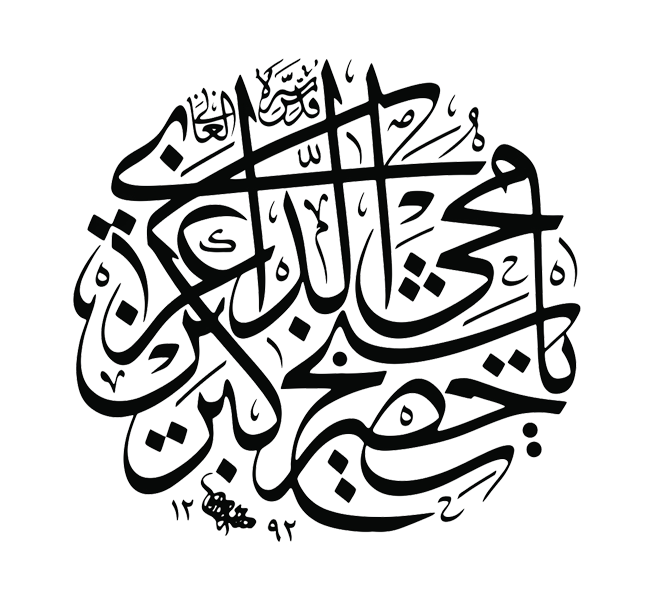
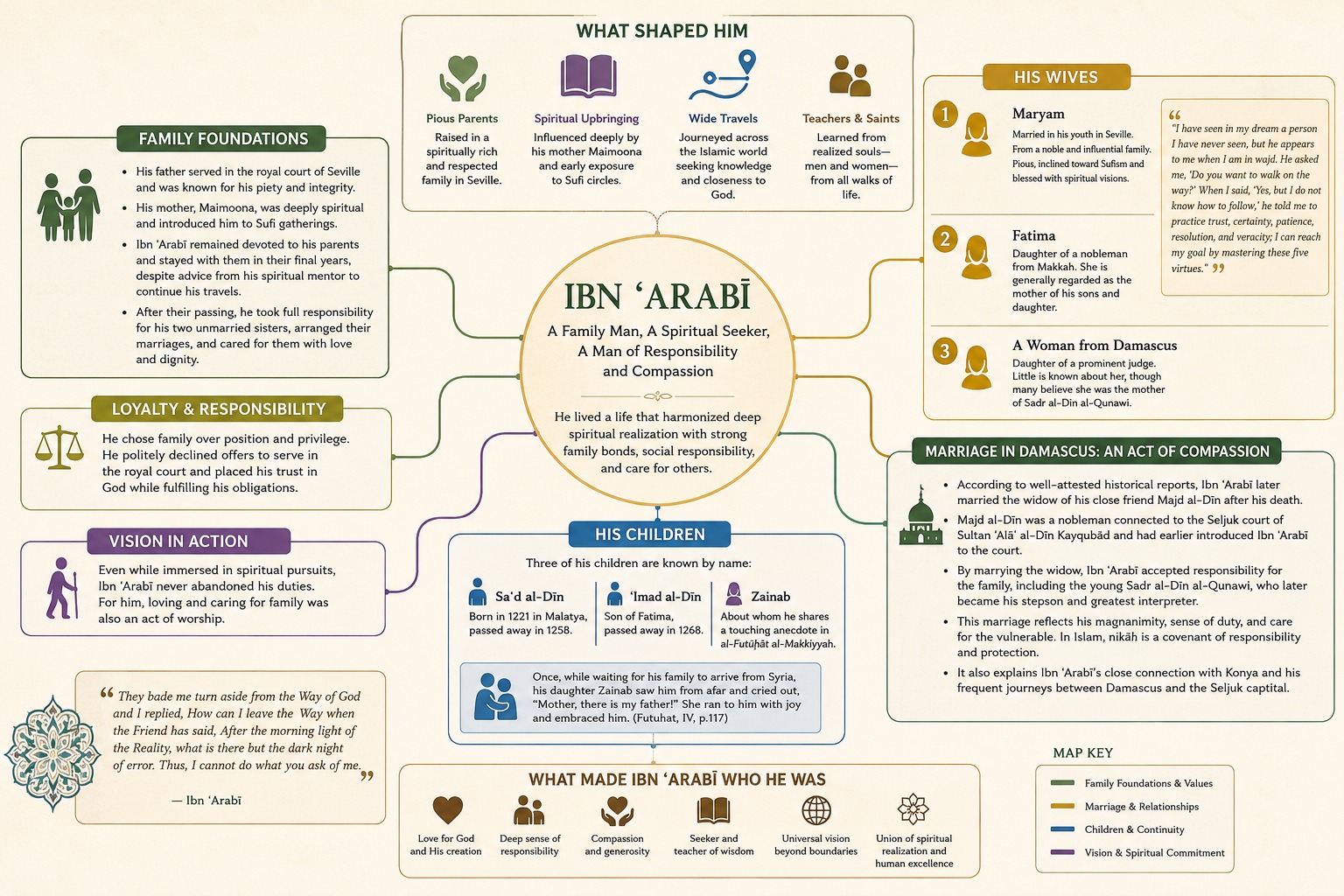
Islam teaches that God is One, the Creator of everything, and that the Qur’an and the teachings of Prophet Muhammad ﷺ are the primary sources of guidance. Throughout Islamic history, many scholars have helped Muslims understand these teachings more deeply. Among the most influential of these scholars is Shaykh Muhyi al-Din Ibn Arabi (1165–1240), often known as al-Shaykh al-Akbar (“The Greatest Master”). Ibn Arabi wrote hundreds of works on spirituality, the Qur’an, human nature, and the relationship between God and creation. His writings have inspired generations of Muslim scholars, philosophers, and spiritual seekers. At the same time, they have also been widely discussed and debated because of their depth and symbolic language.
This website is designed for readers who want to explore Ibn Arabi’s thought in a clear and authentic way. It is intended both for people beginning their journey into Islamic spirituality and for readers interested in understanding his ideas about the nature of reality, knowledge, and the human being.
Many people have formed opinions about Ibn Arabi without reading his original works. His teachings are sometimes presented in oversimplified or misleading ways. Reading him carefully, within the context of the Qur’an, the Sunnah, and the wider Islamic intellectual tradition, reveals a much richer and more balanced picture. Ibn Arabi does not invite readers to accept simple slogans or easy answers. Instead, he encourages careful reflection on God’s signs in ourselves and in the universe. His writings often use symbols, paradoxes, and different levels of meaning to help readers move beyond superficial understanding toward deeper spiritual insight. Studying Ibn Arabi is therefore not simply an intellectual exercise. It is a journey of learning, reflection, and self-discovery. Like many great scholars of Islam, he reminds us that true knowledge is not gained only by reading books, but by combining knowledge with sincerity, faith, and spiritual growth.