
External Links
Hazrat Abdul Qadir al-Jilani
According to the tradition, Ibn Arabi’s father had been married for many years without having a male child. Desperate to have a son, he made the journey to meet Hazrat Abdul Qadir al-Jilani in Baghdad, known for his spiritual authority and as the founder of the Qadiriyya Sufi order. He requested the saint to intercede on his behalf and pray that God would grant him a son. Hazrat Abdul Qadir al-Jilani is said to have made dua (supplication) for Ibn Arabi’s father, and as a result of this prayer, Muhyi al-Din Ibn Arabi was born in 1165 in Murcia, Spain. During his travels Ibn Arabi met many followers of Qadri Silsila; they exchanged their knowledge and experience in Sufi meetings.
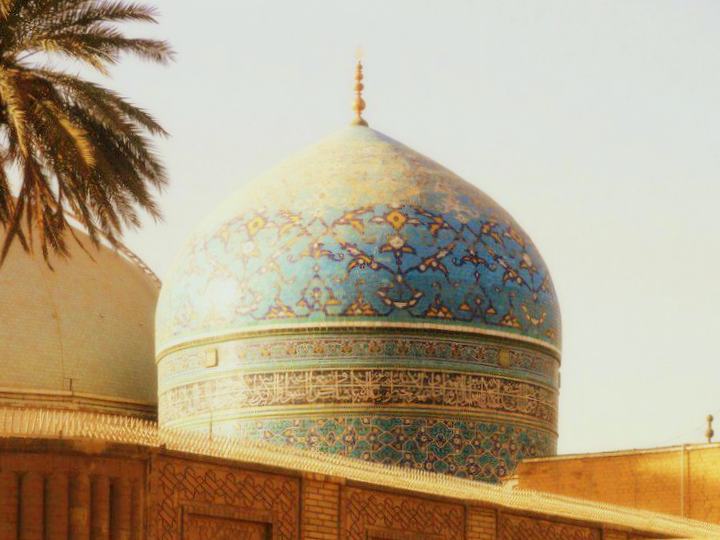
Although this story is part of the oral tradition and Sufi folklore rather than documented history, it underscores the deep spiritual connections within the Sufi world. The association between Abdul Qadir al-Jilani and Ibn Arabi’s birth serves to strengthen the spiritual ties between two of the greatest Sufi masters in Islamic history, reflecting the Sufi belief in the power of intercession and the miraculous influence of saints.
According to Jāmī’s Nafaḥāt al-Uns, Abu Madyan recognized the universal spiritual authority of Shaykh ʿAbd al-Qādir al-Jīlānī, famously bowing his neck when al-Jīlānī proclaimed, “My foot is upon the neck of every saint.” Jāmī also records the saying that Abu Madyan was “the Master of the West,” while al-Jīlānī was “the Master of the East.”
Shaykh Abu Yaʿzā and the Mūsawī Inheritance
Among the great spiritual figures who influenced the tradition inherited by Ibn ʿArabī, Shaykh Abu Yaʿzā (Abū Yaʿzā Yalnūr ibn Maymūn) occupies a remarkable place. Although Ibn ʿArabī never met him personally, he regarded him with immense respect through the spiritual lineage of Shaykh Abu Madyan, Abu Yaʿzā’s celebrated disciple. On several occasions, Ibn ʿArabī refers to Abu Madyan simply as “our Shaykh,” reflecting both reverence and a sense of belonging to the same spiritual inheritance.
The Prophetic Inheritances
One of the distinctive teachings of Sufism is that every prophet embodies a particular aspect of divine wisdom. While all spiritual paths ultimately lead to the Prophet Muhammad ﷺ, saints may inherit specific qualities associated with earlier prophets.
Within this understanding:
- Prophet ʿĪsā (Jesus) represents compassion, inward purity, asceticism, and spiritual intimacy.
- Prophet Mūsā (Moses) represents strength, guidance, divine law, and transformative encounter with God.
Ibn ʿArabī occasionally describes his own spiritual development through the language of prophetic inheritance, suggesting that the seeker may be shaped by multiple prophetic qualities before arriving at the comprehensive Muhammadan inheritance.
The Prophet Muhammad ﷺ
Above every other relationship stood the Prophet Muhammad ﷺ. Ibn ʿArabī regarded him as the perfect human being (al-Insān al-Kāmil), the seal of prophethood, and the supreme source of spiritual inheritance. He believed that every saint receives knowledge through the Muhammadan Reality, and many of his most significant works were inspired through dreams and visionary encounters connected to the Prophet. For Ibn ʿArabī, every path ultimately leads back to the Prophet as the complete manifestation of divine guidance.

Ibn Masarra
Although Ibn Masarra had died long before Ibn ʿArabī’s birth, his intellectual legacy continued to influence Andalusian spirituality. Ibn Masarra’s emphasis on inner meanings of revelation, symbolic interpretation, and contemplation formed part of the spiritual environment that later nurtured Ibn ʿArabī’s own metaphysical vision.
Abu Madyan
Shaykh Abu Madyan (c. 1126–1198) was one of the greatest Sufi masters of the Islamic West (the Maghrib). Born in Andalusia, he later settled in North Africa, where he became renowned for his wisdom, humility, and deep spirituality. Thousands of seekers travelled to learn from him, and his teachings shaped the development of Sufism throughout the region.
Although Ibn ʿArabī was still young when Abu Madyan passed away, he regarded him as one of the greatest saints of his age. Abu Madyan’s influence extended far beyond his lifetime through his students, teachings, and spiritual legacy.
Connection with Ibn ʿArabī
Abu Madyan occupies a unique place in Ibn ʿArabī’s life. Rather than being simply a teacher, he became one of Ibn ʿArabī’s greatest spiritual inspirations. Throughout his writings, Ibn ʿArabī refers to him with profound respect, often calling him our Shaykh.
Although Ibn ʿArabī’s personal contact with Abu Madyan appears to have been limited, his teachings deeply influenced Ibn ʿArabī’s understanding of the spiritual path. Abu Madyan represented the mature Sufi tradition of the Maghrib, a tradition that Ibn ʿArabī inherited and developed in his own unique way.
Spiritual Significance
Ibn ʿArabī frequently quotes Abu Madyan to illustrate the qualities of a true seeker. Three themes appear repeatedly.
Seeing God’s Signs Everywhere
Ibn ʿArabī recounts a story in which Abu Madyan unexpectedly met a stranger while helping a poor man. The encounter seemed ordinary, yet Abu Madyan recognized it as a reminder from God rather than a coincidence. The incident illustrates a central Sufi principle: every event can become a sign for those whose hearts are spiritually awake.
Reflection: A seeker learns to look beyond appearances and discover God’s wisdom in the ordinary events of daily life.
The Outer and Inner Meanings of Faith
One of Abu Madyan’s most important teachings, preserved by Ibn ʿArabī, is that a complete believer embraces both the outward practice of Islam and its inward spiritual reality. The external teachings of the Qur’an and Sunnah provide guidance for life, while their inner meanings transform the heart. Neither should be neglected.
Reflection: Spiritual insight should deepen our commitment to faith, not replace it.

Never Stop Growing
Ibn ʿArabī also records Abu Madyan’s teaching that the spiritual journey never truly ends. Divine knowledge is infinite, and every moment offers a new opportunity to know God more deeply. The seeker should therefore avoid becoming spiritually complacent or believing that they have reached the destination.
Reflection: Every day is a new beginning on the journey toward God.
A Saying of Abu Madyan
Among the sayings that Ibn ʿArabī preserved is this concise teaching:

Respect for the Malāmatiyya in Ibn Arabi’s Thought
According to the tradition, Ibn Arabi’s father had been married for many years without having a male child. Desperate to have a son, he made the journey to meet Hazrat Abdul Qadir al-Jilani in Baghdad, known for his spiritual authority and as the founder of the Qadiriyya Sufi order. He requested the saint to intercede on his behalf and pray that God would grant him a son. Hazrat Abdul Qadir al-Jilani is said to have made dua (supplication) for Ibn Arabi’s father, and as a result of this prayer, Muhyi al-Din Ibn Arabi was born in 1165 in Murcia, Spain. During his travels Ibn Arabi met many followers of Qadri Silsila; they exchanged their knowledge and experience in Sufi meetings.