Metaphysics
Reflecting the Divine Names (الأسماء الحسنى)
From knowing the Names to the completion of character
Allah (al-Ḥaqq) → Tanzīh and Tashbīh → The Five Divine Presences → Dhikr → Tajallī → The Imaginal World → Qalb → Kashf → The Divine Names → The Complete Person
وَلِلّٰهِ الْأَسْمَاءُ الْحُسْنَىٰ فَادْعُوهُ بِهَا
“To Allah belong the Most Beautiful Names, so call upon Him by them.” Qurʾān 7:180
What are the Divine Names?
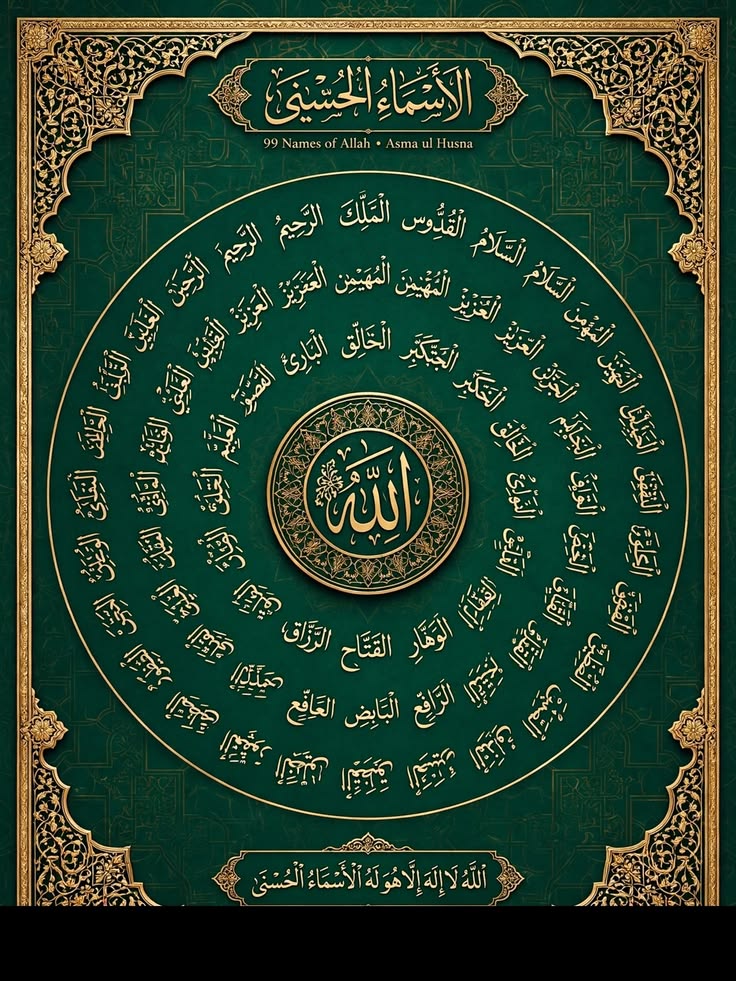
The Divine Names, al-Asmāʾ al-Ḥusnā (الأسماء الحسنى), are the Beautiful Names through which Allah makes Himself known. The Qurʾān speaks of Allah as the Merciful, the Knowing, the Living, the Powerful, the Forgiving, the Creator, and the Guide.
The Names are not separate beings or parts into which Allah may be divided. Allah is One, while His Names express the different ways in which His perfection becomes known. Al-Raḥmān (الرحمن) reveals mercy, al-ʿAlīm (العليم) knowledge, al-Qadīr (القدير) power, and al-Hādī (الهادي) guidance. Yet it is always the one Allah who is Merciful, Knowing, Powerful, and Guiding.
The well-known Prophetic tradition gives special importance to ninety-nine Names. This does not mean that the Names of Allah are limited to that number. Allah cannot be confined within any human enumeration.
The One Named and the many Names
Ibn ʿArabī distinguishes between the Divine Essence, which cannot be comprehended, and the Names through which Allah enters into relationship with creation. We cannot encompass what Allah is in Himself, but we may know Him according to the ways in which He has named and revealed Himself. Every Name refers to the same Named, but each discloses a distinct meaning. Al-Ghafūr, the Forgiving, does not communicate exactly the same relationship as al-ʿAdl, the Just, although both name the same Allah. The Names are therefore united in the One to whom they belong and distinguished by the meanings they reveal. Through them, Ibn ʿArabī explains how unity and diversity appear together: Allah is One, while the signs and effects of His Names are innumerable.
Three kinds of Divine Names
The Divine Names may be approached through three broad categories. These divisions assist understanding, although some Names may be considered from more than one perspective.
1 - Names of the Essence
Asmāʾ al-Dhāt (أسماء الذات) point towards Allah considered in His Divine Reality. They include Allah (الله), al-Aḥad (الأحد), the One, and al-Ḥaqq (الحق), the Real. They remind the believer that every Name belongs to the one Divine Reality who remains beyond limitation and comparison.
2- Names of the Attributes
Asmāʾ al-Ṣifāt (أسماء الصفات) reveal Divine qualities such as life, knowledge, power, hearing, sight, and mercy. They include al-Ḥayy (الحي), the Living; al-ʿAlīm (العليم), the Knowing; al-Qadīr (القدير), the Powerful; al-Samīʿ (السميع), the Hearing; and al-Baṣīr (البصير), the Seeing.
3 - Names of the Acts
Asmāʾ al-Afʿāl (أسماء الأفعال) become known through Allah’s acts and His relationships with creation. They include al-Khāliq (الخالق), the Creator; al-Razzāq (الرزاق), the Provider; al-Muḥyī (المحيي), the Giver of Life; al-Mumīt (المميت), the Giver of Death; and al-Hādī (الهادي), the Guide.
These categories are not rigid compartments. One Name may disclose the Divine Essence, an Attribute, and an act from different perspectives. Every Name ultimately returns to Allah.
The Names within creation
For Ibn ʿArabī, the created world displays the signs and effects of the Divine Names. Life points towards al-Ḥayy; knowledge towards al-ʿAlīm; provision towards al-Razzāq; and forgiveness towards al-Ghafūr. Created beings do not possess these qualities independently. They receive them from Allah in limited, created forms. Human mercy, knowledge, and generosity are therefore neither equal nor comparable to the limitless perfection of Allah. Every being receives according to its preparedness, istiʿdād (استعداد). A seed receives life in one form, an animal in another, and a person in a more comprehensive form. Even among people, capacities and dispositions differ. One person may display compassion strongly, another firmness, another patience, and another knowledge. No created being can contain the fullness of a Divine Name. Creation provides signs through which Allah may be known, but Allah always transcends every form in which the effects of His Names appear.
Beauty, Majesty, and Perfection
The Divine Names may also be approached through the complementary meanings of Jamāl (جمال), Jalāl (جلال), and Kamāl (كمال). This is not a rigid separation, since every Divine Name belongs to Allah and expresses perfection. It is a spiritual way of understanding how the Names awaken love, awe, and balance within the believer.
Names of Beauty — Jamāl
The Names of Jamāl disclose Divine beauty, mercy, nearness, tenderness, generosity, and forgiveness. They include al-Raḥmān, the Merciful; al-Wadūd, the Loving; al-Laṭīf, the Subtle and Gentle; al-Karīm, the Generous; and al-Ghafūr, the Forgiving. These Names awaken love, hope, gratitude, and intimacy. Their effects soften the heart and teach the servant to become compassionate, forgiving, generous, and considerate towards creation. Beauty without spiritual discipline, however, may be misunderstood as indulgence. Divine mercy does not remove moral responsibility; it enables repentance, restoration, and return.
Names of Majesty — Jalāl
The Names of Jalāl disclose Divine greatness, sovereignty, power, independence, and irresistible authority. They include al-ʿAzīz, the Mighty; al-Jabbār, the Compeller and Restorer; al-Qahhār, the All-Subduing; al-Qawī, the Strong; and al-Mutakabbir, the Supremely Great. These Names awaken reverence, humility, vigilance, and awe. They remind the servant that Allah cannot be reduced to human expectations or approached only through comforting images. Their ethical reflection is not domination or harshness. Divine Majesty teaches moral courage, firmness against injustice, discipline over the baser self, and the humility of recognizing that all true power belongs to Allah.
Names of Perfection — Kamāl
Kamāl points towards completeness and the harmonious gathering of Beauty and Majesty. It does not form a closed group entirely separate from the other Names, because every Divine Name expresses perfection. Rather, it describes the balance in which mercy and justice, tenderness and strength, nearness and transcendence are understood together. The comprehensive Name Allah (الله) gathers all meanings of Beauty, Majesty, and Perfection. No single quality is isolated from the wisdom of the whole. The servant therefore seeks neither gentleness without firmness nor strength without mercy. Spiritual maturity appears when each quality is expressed in its proper measure and circumstance.
A threefold strategy for character
The threefold movement may be applied to spiritual formation:
1. Receive through Jamāl
Recognize Allah’s mercy, beauty, generosity, and nearness. Allow hope and gratitude to soften the heart.
2. Be disciplined through Jalāl
Recognize Allah’s greatness, authority, and justice. Allow reverence to correct pride, heedlessness, and self-willed conduct.
3. Seek balance through Kamāl
Bring tenderness and firmness, hope and awe, forgiveness and accountability into their proper relationship.
This movement prevents spiritual character from becoming one-sided. A person formed only through the language of Majesty may become severe, fearful, or judgmental. A person who attends only to Beauty may avoid discipline, accountability, and difficult moral duties. Kamāl does not weaken either dimension; it places both under Divine wisdom.
Choosing a Name for Dhikr
The Qurʾān instructs believers to call upon Allah by His Beautiful Names. A person may therefore choose a Name corresponding to a genuine spiritual or worldly need:
- Yā Raḥmān, Yā Raḥīm when seeking mercy and learning to show mercy
- Yā Ghafūr, Yā Ghaffār when seeking forgiveness and returning from wrongdoing;
- Yā Hādī when seeking guidance;
- Yā Laṭīf when seeking Allah’s subtle care during difficulty;
- Yā Fattāḥ when asking Allah to open a lawful way or deepen understanding;
- Yā Ṣabūr when seeking patience and steadfastness;
- Yā Salām when seeking inward peace and reconciliation.
The need should guide the invocation, but the Name must not be reduced to a technique for obtaining a desired result. One does not control the power of a Divine Name. One calls upon Allah through it with dependence, sincerity, and trust.
A person seeking guidance through al-Hādī must also become willing to follow guidance. One who seeks forgiveness through al-Ghafūr must sincerely repent and learn to forgive others. Invocation therefore joins prayer with responsibility.
For a fixed wird involving a prescribed number, sequence, time, or specialized spiritual purpose, it is better to follow an established devotional tradition or the guidance of an experienced and trustworthy teacher.
Allah as the comprehensive Name
Among the Divine Names, Allah (الله) has a unique place. Ibn ʿArabī understands it as the comprehensive Name because it gathers the meanings of all the other Names. When the servant says Allāh, remembrance is not directed towards only one Divine quality. The heart turns towards the One who is Merciful, Knowing, Living, Powerful, Forgiving, Just, and Wise. The repetition of this comprehensive Name gathers a heart divided among many concerns and directs it towards the One who contains every perfection.
Three relationships with the Names
Ibn ʿArabī’s approach to the Divine Names may be understood through three related movements:
Taʿalluq (تعلّق)
Taʿalluq is attachment or dependence. The servant turns towards Allah through a particular Name because the servant needs what only Allah can give. The weak depend upon al-Qawī, the Strong; those in need upon al-Ghanī, the Self-Sufficient; and those seeking direction upon al-Hādī, the Guide.
Taḥaqquq (تحقّق)
Taḥaqquq is realization or true understanding. The seeker recognizes what the Name reveals about Allah and perceives its signs within creation. This realization also establishes the proper distinction between Divine perfection and its limited created reflection.
Takhalluq (تخلّق)
Takhalluq is the formation of character according to the qualities Allah loves. The servant does not acquire the Divine Attributes, but receives their ethical guidance. The one who remembers al-Raḥmān should become more merciful; the one who invokes al-Karīm more generous; and the one who calls upon al-ʿAdl more just.
Thus, the movement begins with need, deepens through recognition, and bears fruit in character.
The formation of character
The Divine Names provide a spiritual measure for human conduct. They teach that character is not formed by strengthening every impulse, but by bringing each quality into its proper relationship with Divine guidance. Mercy must not become indifference to injustice. Justice must not become harshness. Knowledge must not produce pride. Strength must remain joined with compassion, and forgiveness must not become permission for continuing harm. Completion therefore requires balance. A person may naturally reflect one quality more strongly than another, but spiritual maturity calls for the harmonization of qualities. The appropriate response changes with the situation: tenderness may be required in one moment and firmness in another. The purified heart does not act merely from temperament, habit, or the demands of the lower self. It learns to respond with wisdom, giving each quality its proper place and measure.
From the Divine Names to the Complete Person
The Divine Names lead towards Ibn ʿArabī’s understanding of the Complete Person, al-Insān al-Kāmil (الإنسان الكامل). This person does not possess the Divine Names or become divine. The Names belong absolutely to Allah. The servant reflects only their created effects according to the capacity Allah has given.
Every person contains the possibility of reflecting many qualities, but these often appear partially or without balance. In the Complete Person, they are brought into harmony. Knowledge is joined with humility, strength with mercy, justice with forgiveness, and spiritual realization with servanthood.
The Prophet Muḥammad ﷺ is the supreme created model of this harmony. His completeness does not raise him beyond servanthood; it reveals the fullness of servanthood. His character shows how the meanings loved by Allah may be expressed within a human life.
Why it matters today
Modern culture often encourages people to develop one dominant quality: power, confidence, intelligence, productivity, or influence. The Divine Names offer a more integrated understanding of personal development.
They teach that no created quality is independent and no single quality is sufficient. Strength must answer to justice, knowledge to responsibility, and achievement to mercy. Human development is not simply the expansion of ability; it is the formation of balanced character under Divine guidance.
The purpose is not to magnify the self, but to refine the servant.
Key ideas
- The Beautiful Names belong absolutely to Allah.
- All the Names refer to one Divine Reality while revealing distinct meanings.
- Creation displays their signs and effects without containing Allah
- Every being receives according to its preparedness.
- A Name may be invoked according to a genuine spiritual need.
- Invocation is dependence upon Allah, not a technique for controlling results.
- Taʿalluq is dependence, taḥaqquq is realization, and takhalluq is the formation of character.
- Human completion requires balance among mercy, justice, knowledge, strength, and humility.
- The Prophet Muḥammad ﷺ is the supreme model of complete servanthood.
Reflective Note
The Divine Names teach the believer to read both the world and the inner life differently. Mercy points towards al-Raḥmān, knowledge towards al-ʿAlīm, forgiveness towards al-Ghafūr, and every genuine act of generosity towards al-Karīm.
Recognition, however, is only the beginning. The purpose of knowing the Names is to call upon Allah through them, and the purpose of invocation is transformation. The tongue remembers, the heart recognizes, and character gradually changes.
The journey moves from knowing the Names to living under their guidance. Its culmination is not the enlargement of the self, but the completion of servanthood.
Another intellectual horizon
Ibn ʿArabī provides the foundations for understanding the Complete Person through the Divine Names, the purified heart, the person as microcosm, and the perfection of servanthood. ʿAbd al-Karīm al-Jīlī later gathered these and related teachings into a more systematic doctrine of al-Insān al-Kāmil.