
Allah: The Absolute Reality (Al-Ḥaqq)
Allah (al-Ḥaqq) → Tanzīh & Tashbīh → The Five Divine Presences → Dhikr → Tajallī → The Imaginal World → Qalb → Kashf → The Realized Person (al-Insān al-Kāmil)
Introduction
Everything in Ibn ʿArabī’s understanding of reality begins with Allah (الله). Before discussing creation, persons, prophecy, or the spiritual journey, he asks a fundamental question:
What is ultimate reality?
Throughout his writings, Ibn ʿArabī frequently refers to Allah as Al-Ḥaqq (الْحَقُّ), one of the Beautiful Names of Allah. Literally meaning “The Real” or “The Truth,” Al-Ḥaqq may also be rendered as “the Absolute Reality.” This Divine Name expresses a central truth: Allah alone possesses independent and eternal existence, while everything else exists because He continually grants and sustains its existence.
The Qurʾān itself identifies Allah as Al-Ḥaqq:
ذَٰلِكَ بِأَنَّ ٱللَّهَ هُوَ ٱلْحَقُّ وَأَنَّهُۥ يُحْىِ ٱلْمَوْتَىٰ وَأَنَّهُۥ عَلَىٰ كُلِّ شَىْءٍۢ قَدِيرٌ
“That is because Allah is Al-Ḥaqq—the Truth—and because He gives life to the dead and has power over all things.” Qurʾān 22:6
His answer is simple yet profound:
Allah alone is Al-Ḥaqq—the Absolute Reality. Everything else exists through Him, depends upon Him, and ultimately returns to Him.
The Qurʾān also reminds believers that Allah is unlike anything in creation:
“There is nothing whatever like unto Him, and He is the All-Hearing, the All-Seeing.” Qurʾān 42:11
The Main Idea
According to Ibn ʿArabī, Allah (Al-Ḥaqq) alone possesses absolute and independent existence. Every created thing—whether an angel, a person, a mountain, a star, or the smallest living creature—exists only because Allah continually gives it existence. This does not mean that creation is identical with Allah. Creation depends entirely upon Him. Like an image appearing in a mirror, it can reveal something without becoming identical with the reality it reflects. The mirror and its image remain created; Allah remains their Creator and Sustainer. Everything begins with Al-Ḥaqq, exists through Al-Ḥaqq, and ultimately returns to Al-Ḥaqq.
Allah and His Beautiful Names
The Qur'an introduces Allah through al-Asmāʾ al-Ḥusnā (الأسماء الحسنى)—the Beautiful Names. These Names reveal His perfect attributes and His relationship with creation. Among them are:
- الرَّحْمٰن (Ar-Raḥmān) – The Entirely Merciful
- الرَّحِيم (Ar-Raḥīm) – The Especially Merciful
- الْعَلِيم (Al-ʿAlīm) – The All-Knowing
- الْحَكِيم (Al-Ḥakīm) – The All-Wise
- الْخَالِق (Al-Khāliq) – The Creator
- الْغَفُور (Al-Ghafūr) – The All-Forgiving
- الْحَقُّ (Al-Ḥaqq) – The Absolute Reality
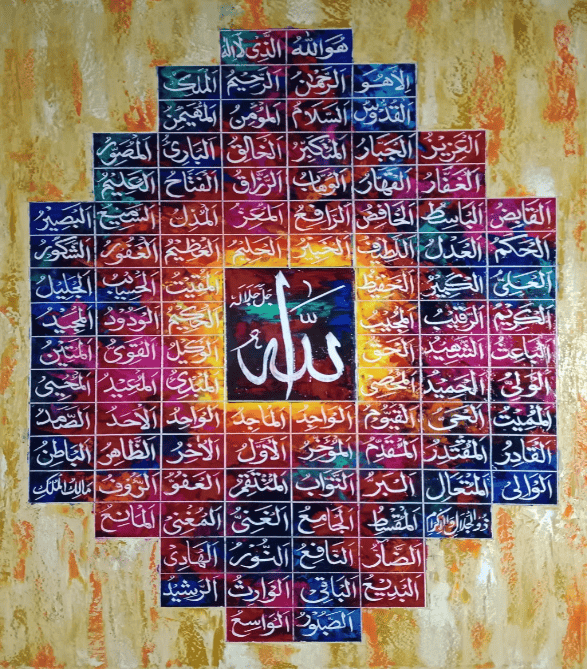
For Ibn ʿArabī, these Divine Names are not simply descriptions of Allah. They are ways in which Allah makes Himself known to creation. Every created thing reflects one or more of these Divine attributes in its own limited way. By reflecting upon these signs, human beings gradually come to know their Creator more deeply.
Creation: A Universe of Signs
When we look at the heavens, the earth, the oceans, mountains, plants, animals, and people, we see an extraordinary diversity of life. For Ibn ʿArabī, the universe is filled with āyāt (آيات)—signs that point towards Allah. Every creature reflects something of His wisdom, mercy, beauty, justice, power, or creativity. The world is therefore neither separate from Allah as though it existed independently, nor is it Allah Himself. It is a created universe that exists because Allah continuously sustains it. Every created form reveals something through the Divine Names, yet no finite form can contain limitless Reality. Creation therefore points towards Allah while also reminding us that He remains beyond everything we perceive.
To understand creation is not merely to study the world, but to recognize the signs that lead us back to its Creator.
Why This Matters
- Allah alone is Al-Ḥaqq—the Absolute Reality.
- Everything in creation exists through Allah and depends entirely upon Him.
- The universe is filled with signs that point towards its Creator.
- The Beautiful Names of Allah help us understand His relationship with creation.
- No finite form can contain or encompass the limitless Reality.
- The journey of knowing creation is ultimately a journey of knowing Allah.
Key Takeaways
- Allah alone is Al-Ḥaqq—the Absolute Reality.
- Everything in creation exists through Allah and depends entirely upon Him.
- The universe is filled with signs that point toward its Creator.
- The Beautiful Names of Allah help us understand His relationship with creation.
- The journey of knowing creation is ultimately a journey of knowing Allah.
Points to Reflect Upon
- If Allah alone possesses absolute reality, what does this tell us about our own dependence upon Him?
- How can observing nature deepen our awareness of Allah?
- Which of Allah's Beautiful Names do you notice most often in your daily life?

In the next section, we shall explore Tanzīh and Tashbīh—Ibn ʿArabī’s balanced understanding of Allah’s absolute incomparability and His nearness to creation.