
- Vision
- Way
- Insaan Kami
From Al-Ḥaqq to the Realized Person (الإنسان الكامل)
When Allah Makes Himself Known
Allah (al-Ḥaqq) → Tanzīh & Tashbīh → The Five Divine Presences → Dhikr → Tajallī → The Imaginal World → Qalb → Kashf → Asma al Husna → The Realized Person (al-Insān al-Kāmil)
This Hadith Qudsi begins the mystery of creation with this widely transmitted sacred saying. It presents creation as an act of Divine self-disclosure: the hidden meanings of the Divine Names become known through the worlds in which they are manifested. Our pursuit began with unfolding of treasure.
Our journey began with Al-Ḥaqq (الحق)—Allah, the Absolute Reality. From there, we explored the Unity of Being, the Divine Presences, dhikr (remembrance), tajallī (Divine Self-Disclosure), the Imaginal World, the spiritual heart (qalb), and kashf (spiritual unveiling). Each chapter revealed another dimension of Ibn ʿArabī’s vision, gradually leading us towards taḥqīq (تحقيق)—spiritual realization.
For Ibn ʿArabī, taḥqīq is much more than acquiring knowledge or understanding mystical ideas. It is the realization of truth until it transforms the whole person. As the heart awakens, one’s understanding deepens, one’s character is refined, and one’s way of seeing the world changes. This transformation leads to what may be called a unity of perception—a way of seeing beyond apparent differences to recognize the Divine wisdom that underlies all creation.
This unity of perception gives rise to a unified vision of reality. The realized person no longer sees existence as fragmented or disconnected, but as a harmonious whole sustained by Al-Ḥaqq. Diversity is no longer viewed as conflict or contradiction; rather, it is understood as one of the greatest signs of Allah’s infinite creativity and wisdom.
Human beings are wonderfully diverse. They differ in their abilities, personalities, interests, and life experiences. Some are called to become teachers, others physicians, scientists, engineers, artists, farmers, bakers, businesspeople, parents, or public servants. Their journeys are not identical, nor are they meant to be.
كُنْتُ كَنْزًا مَخْفِيًّا فَأَحْبَبْتُ أَنْ أُعْرَفَ فَخَلَقْتُ الْخَلْقَ لِكَيْ أُعْرَفَ
" I was a Hidden Treasure and loved to be known; therefore, I created creation so that I might be known. "
This Hadith Qudsi begins the mystery of creation with this widely transmitted sacred saying. It presents creation as an act of Divine self-disclosure: the hidden meanings of the Divine Names become known through the worlds in which they are manifested. Our pursuit began with unfolding of treasure.
Our journey began with Al-Ḥaqq (الحق)—Allah, the Absolute Reality. From there, we explored the Unity of Being, the Divine Presences, dhikr (remembrance), tajallī (Divine Self-Disclosure), the Imaginal World, the spiritual heart (qalb), and kashf (spiritual unveiling). Each chapter revealed another dimension of Ibn ʿArabī’s vision, gradually leading us towards taḥqīq (تحقيق)—spiritual realization.
For Ibn ʿArabī, taḥqīq is much more than acquiring knowledge or understanding mystical ideas. It is the realization of truth until it transforms the whole person. As the heart awakens, one’s understanding deepens, one’s character is refined, and one’s way of seeing the world changes. This transformation leads to what may be called a unity of perception—a way of seeing beyond apparent differences to recognize the Divine wisdom that underlies all creation.
This unity of perception gives rise to a unified vision of reality. The realized person no longer sees existence as fragmented or disconnected, but as a harmonious whole sustained by Al-Ḥaqq. Diversity is no longer viewed as conflict or contradiction; rather, it is understood as one of the greatest signs of Allah’s infinite creativity and wisdom.
Human beings are wonderfully diverse. They differ in their abilities, personalities, interests, and life experiences. Some are called to become teachers, others physicians, scientists, engineers, artists, farmers, bakers, businesspeople, parents, or public servants. Their journeys are not identical, nor are they meant to be.
Three relationships with Asma al Husna
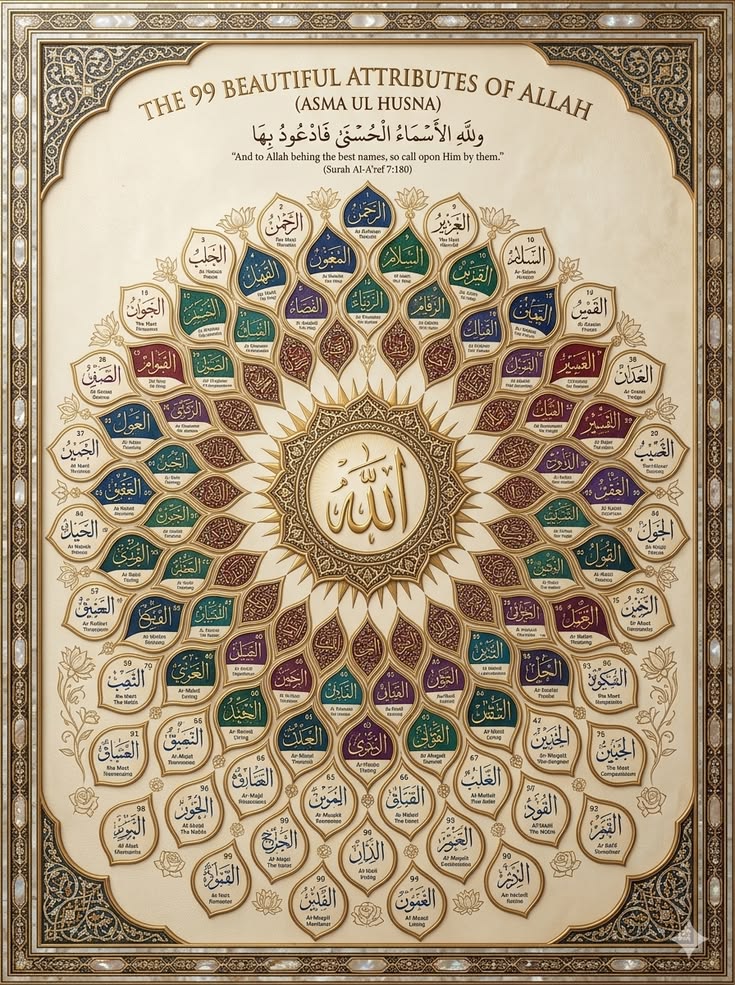
Ibn ʿArabī’s approach to the Divine Names may be understood through three related movements:
Taʿalluq (تعلّق)
Taʿalluq is attachment or dependence. The servant turns towards Allah through a particular Name because the servant needs what only Allah can give. The weak depend upon al-Qawī, the Strong; those in need upon al-Ghanī, the Self-Sufficient; and those seeking direction upon al-Hādī, the Guide.
Taḥaqquq (تحقّق)
Taḥaqquq is realization or true understanding. The seeker recognizes what the Name reveals about Allah and perceives its signs within creation. This realization also establishes the proper distinction between Divine perfection and its limited created reflection.
Takhalluq (تخلّق)
Takhalluq is the formation of character according to the qualities Allah loves. The servant does not acquire the Divine Attributes but receives their ethical guidance. The one who remembers al-Raḥmān should become more merciful; the one who invokes al-Karīm more generous; and the one who calls upon al-ʿAdl more just. Thus, the movement begins with need, deepens through recognition, and bears fruit in character.
The formation of character
The Divine Names provide a spiritual measure for human conduct. They teach that character is not formed by strengthening every impulse, but by bringing each quality into its proper relationship with Divine guidance. Mercy must not become indifference to injustice. Justice must not become harshness. Knowledge must not produce pride. Strength must remain joined with compassion, and forgiveness must not become permission for continuing harm. Completion therefore requires balance. A person may naturally reflect one quality more strongly than another, but spiritual maturity calls for the harmonization of qualities. The appropriate response changes with the situation: tenderness may be required in one moment and firmness in another. The purified heart does not act merely from temperament, habit, or the demands of the lower self. It learns to respond with wisdom, giving each quality its proper place and measure.
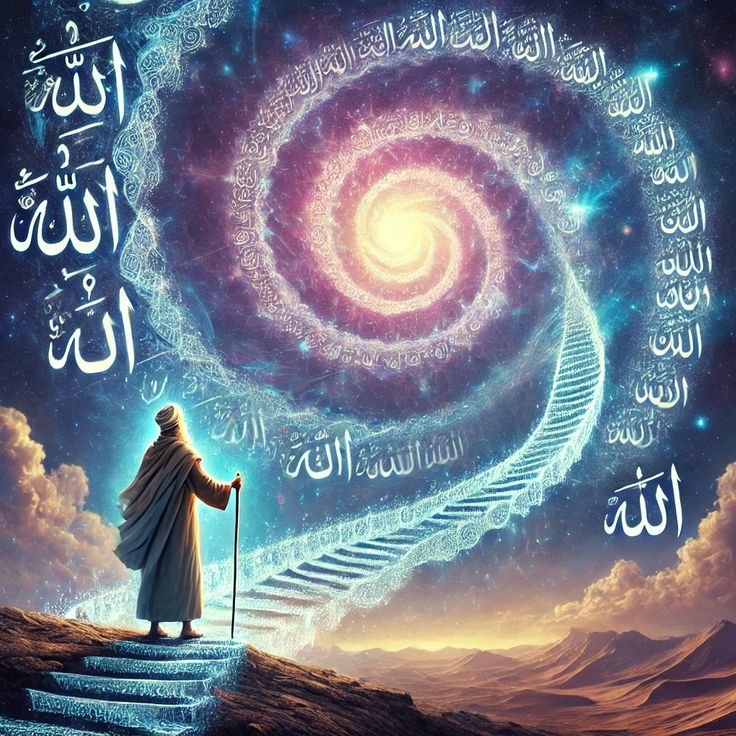
From the Divine Names to the Complete Person
The Divine Names lead towards Ibn ʿArabī’s understanding of the Complete Person, al-Insān al-Kāmil (الإنسان الكامل). This person does not possess the Divine Names or become divine. The Names belong absolutely to Allah. The servant reflects only their created effects according to the capacity Allah has given. Every person contains the possibility of reflecting many qualities, but these often appear partially or without balance. In the Complete Person, they are brought into harmony. Knowledge is joined with humility, strength with mercy, justice with forgiveness, and spiritual realization with servanthood. The Prophet Muhammad ﷺ is the supreme created model of this harmony. His completeness does not raise him beyond servanthood; it reveals the fullness of servanthood. His character shows how the meanings loved by Allah may be expressed within human life.
Recognizing Diversity
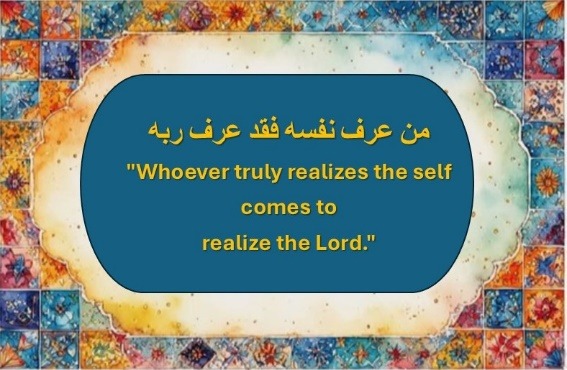
For Ibn ʿArabī, this diversity is not an obstacle to unity—it is its fulfilment. Every person reflects different Divine Names according to the gifts Allah has entrusted to them. Just as every organ in the human body performs a unique function while serving the life of the whole, every individual has a unique role within Allah's greater plan. What unites humanity is not that everyone does the same work, but that every sincere vocation can become an act of worship when carried out with faith, integrity, and the intention of serving Allah and His creation. The realized person therefore does not withdraw from the world. On the contrary, they participate in it more deeply, recognizing that every honest profession, every act of compassion, every pursuit of knowledge, and every sincere service to others has the potential to reflect the Divine Names. Unity is found not in uniformity, but in recognizing that many different paths can contribute to one Divine purpose. Perhaps this beautifully expresses a saying cherished throughout the Sufi tradition:
Key Takeaways
- Taʿalluq is dependence, taḥaqquq is realization, and takhalluq is the formation of character.
- Human completion requires balance among mercy, justice, knowledge, strength, and humility.
- The Prophet Muḥammad ﷺ is the supreme model of complete servanthood.
Reflective Note
The journey begins with seeking Al-Ḥaqq, the Absolute Reality. It culminates in taḥqīq—becoming a realized person whose heart reflects Allah's wisdom, mercy, justice, compassion, and love. Such a person sees the unity behind diversity, serves creation with humility, and discovers that the deepest knowledge of oneself is ultimately a path to knowing one's Lord. I hope my readers have enjoyed this spiritual ride with Ibn Arabi. I have very humbly tried to present a conceptual map of Ibn ʿArabī's spiritual vision rather than a rigid sequence of mystical stages. It keeps its roots firmly in Tawḥīd and culminates in the transformation of the human person.